

Key Insights
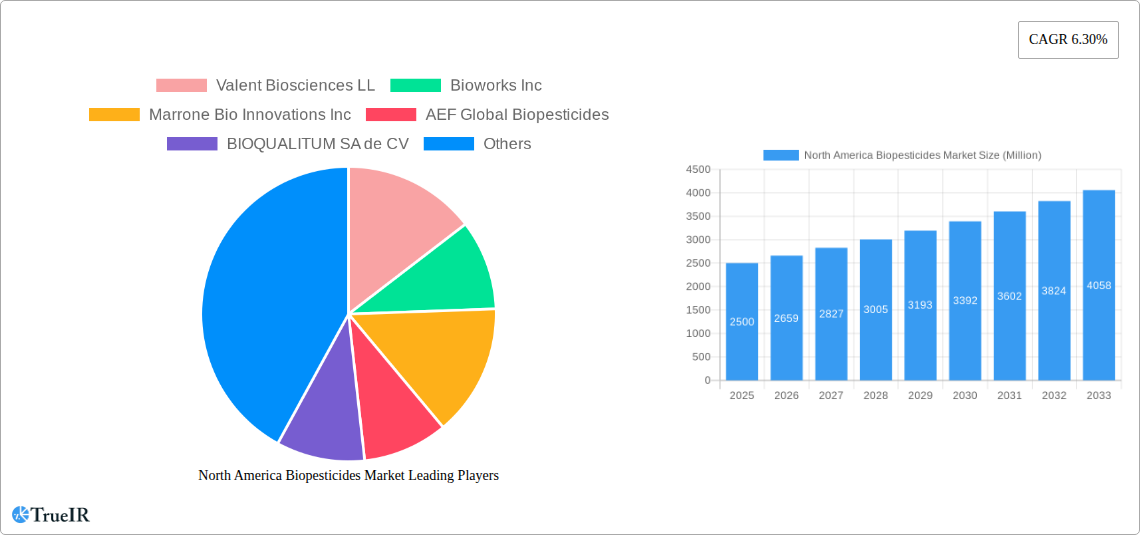
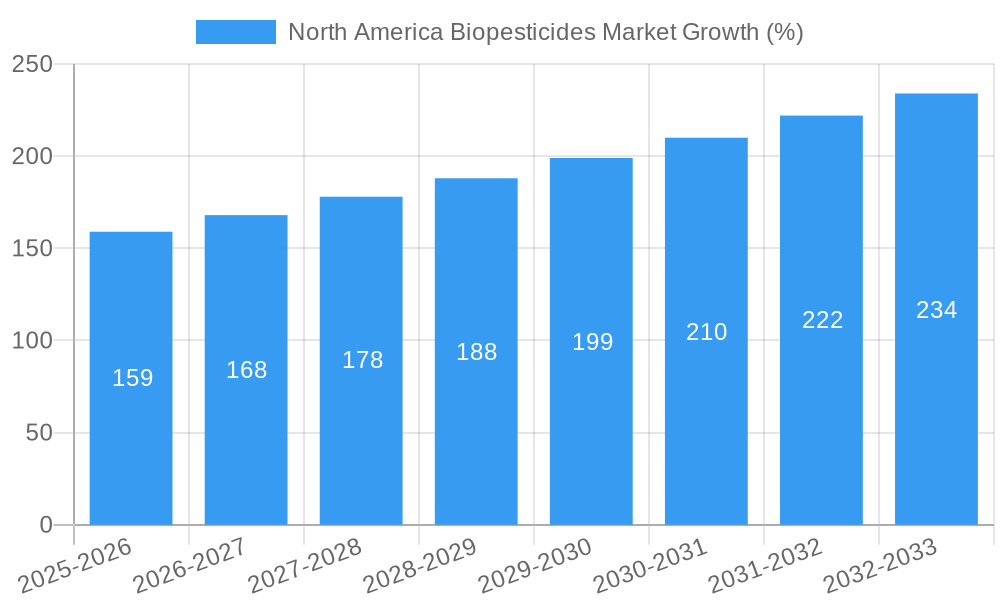
The North American biopesticides market, valued at approximately $2.5 billion in 2025, is projected to experience robust growth, driven by increasing consumer demand for organically produced food, stringent regulations on synthetic pesticides, and growing awareness of environmental sustainability. The market's Compound Annual Growth Rate (CAGR) of 6.3% from 2025 to 2033 indicates a significant expansion, reaching an estimated value exceeding $4 billion by 2033. Key growth drivers include the increasing prevalence of crop diseases and pest infestations, necessitating effective and environmentally friendly pest management solutions. The rising adoption of biopesticides in cash crops (e.g., corn, soybeans, cotton) and horticultural crops (fruits, vegetables) is further fueling market expansion. While the United States holds the largest market share, significant growth potential exists in Canada and Mexico, driven by expanding agricultural sectors and government initiatives promoting sustainable agricultural practices. Market segmentation reveals that bioinsecticides currently dominate, followed by biofungicides, reflecting the prevalent need for effective control of insect pests and fungal diseases. However, the bioherbicides segment is poised for significant growth due to increasing concerns about herbicide resistance and the demand for weed management solutions with reduced environmental impact. Competitive landscape analysis reveals a mix of established players like Corteva Agriscience and Valent Biosciences and emerging innovative companies such as Terramera Inc and Bioworks Inc, constantly developing new and more effective biopesticide formulations. The market’s future trajectory will be significantly shaped by technological advancements, regulatory frameworks, and consumer acceptance of biopesticides as a viable and effective alternative to synthetic pesticides.
The success of individual biopesticide companies will depend on factors including research and development capabilities, regulatory approvals, effective distribution networks, and the ability to meet the specific needs of different crop types and agricultural practices across the diverse North American landscape. The increasing emphasis on precision agriculture and integrated pest management (IPM) strategies creates further opportunities for biopesticide manufacturers to partner with farmers and agricultural consultants. Challenges remain, however, including the often higher cost compared to synthetic pesticides and sometimes lower efficacy in specific situations. Addressing these challenges through continuous innovation and targeted market education will be crucial for driving sustained growth and wider adoption of biopesticides in the North American agricultural sector. Furthermore, the market's success hinges on collaborations across the value chain, including research institutions, government agencies, and farmers, to ensure the development and sustainable application of biopesticides across diverse agricultural settings.
North America Biopesticides Market: A Comprehensive Report (2019-2033)
This dynamic report provides an in-depth analysis of the North America biopesticides market, offering invaluable insights for industry stakeholders, investors, and researchers. The study covers the period from 2019 to 2033, with a focus on the forecast period (2025-2033), base year (2025), and estimated year (2025). The market is segmented by form (biofungicides, bioherbicides, bioinsecticides, other biopesticides), crop type (cash crops, horticultural crops, row crops), and country (United States, Canada, Mexico, Rest of North America). The report projects a market value of xx Million by 2033, showcasing significant growth opportunities. Key players like Valent Biosciences LLC, Bioworks Inc., and Corteva Agriscience are thoroughly analyzed, along with emerging trends and challenges.
North America Biopesticides Market Structure & Competitive Landscape
The North America biopesticides market exhibits a moderately consolidated structure, with a handful of major players commanding significant market share. The Herfindahl-Hirschman Index (HHI) is estimated at xx, indicating a somewhat competitive landscape. However, significant mergers and acquisitions (M&A) activity, as evidenced by xx M&A deals in the last five years, suggests ongoing consolidation. Innovation drives this dynamic market, with companies focusing on developing biopesticides with enhanced efficacy, improved safety profiles, and targeted application methods. Regulatory frameworks, particularly concerning registration and approval processes, significantly influence market entry and expansion strategies. Biopesticides face competition from traditional chemical pesticides, but increasing consumer demand for organic and sustainable farming practices, along with stringent regulations on chemical pesticide use, create a favorable environment for biopesticide adoption. End-user segmentation is dominated by large-scale commercial farms, followed by smaller-scale farms and horticultural operations.
- Market Concentration: HHI estimated at xx
- Innovation Drivers: Development of novel biopesticides, targeted delivery systems, improved efficacy.
- Regulatory Impacts: Stringent registration processes, labeling requirements, and environmental impact assessments.
- Product Substitutes: Traditional chemical pesticides, integrated pest management (IPM) strategies.
- End-User Segmentation: Large-scale commercial farms, small-scale farms, horticultural operations.
- M&A Trends: xx M&A deals in the last five years, indicating consolidation.
North America Biopesticides Market Trends & Opportunities
The North America biopesticides market is experiencing robust growth, driven by several factors. The market size is projected to reach xx Million by 2033, exhibiting a Compound Annual Growth Rate (CAGR) of xx% during the forecast period. This growth is fueled by increasing consumer preference for organic and sustainably produced food, coupled with growing concerns about the environmental and health impacts of synthetic pesticides. Technological advancements, including the development of novel biopesticides with improved efficacy and targeted delivery systems, are also contributing to market expansion. The rising adoption of precision agriculture techniques and the increasing demand for biopesticides in high-value crops like fruits and vegetables further drive growth. Competitive dynamics are shaping the market, with established players focusing on product diversification and strategic acquisitions to expand their market share, while smaller, innovative companies are introducing novel biopesticides and gaining traction. Market penetration rates are steadily increasing, particularly in the cash crops and horticultural segments.
Dominant Markets & Segments in North America Biopesticides Market
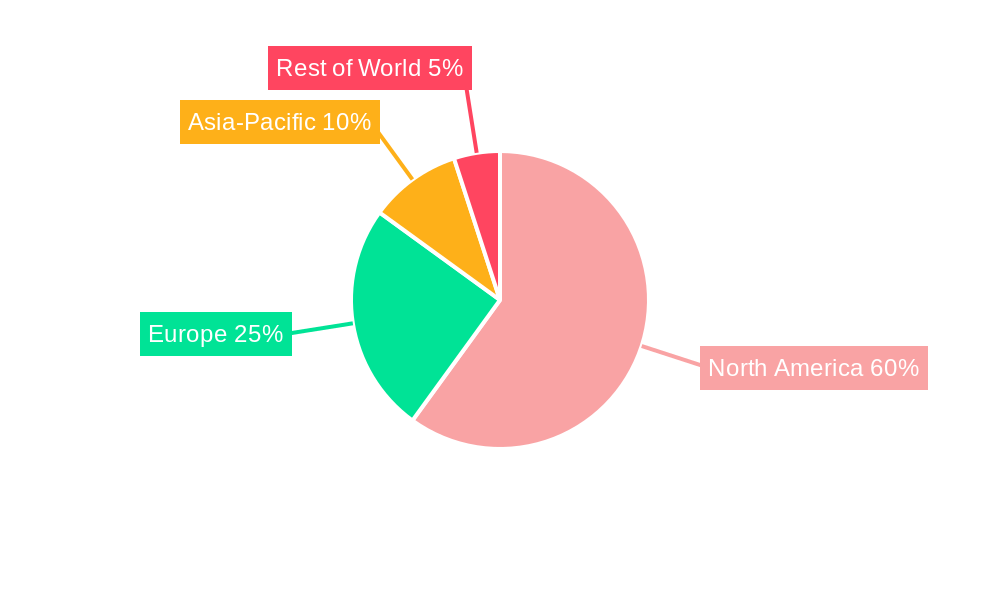
The United States holds the dominant position in the North America biopesticides market, owing to its large agricultural sector and high consumer demand for organic products. However, Canada and Mexico are also witnessing significant growth, driven by government initiatives promoting sustainable agriculture and increasing investments in agricultural biotechnology. Within the segments, bioinsecticides command the largest share of the market, followed by biofungicides. This is due to the pervasive nature of insect pests and fungal diseases across diverse crops. The cash crops segment is the leading crop type, driven by the significant acreage under cultivation and the high economic value of these crops.
- Leading Region/Country: United States
- Leading Segment (Form): Bioinsecticides
- Leading Segment (Crop Type): Cash Crops
Growth Drivers (United States):
- Robust agricultural sector and high consumer demand for organic products.
- Significant investment in agricultural biotechnology and research & development.
- Supportive government policies and initiatives promoting sustainable agriculture.
Growth Drivers (Canada & Mexico):
- Increasing government focus on sustainable agricultural practices and organic farming.
- Expanding horticultural sector and growing demand for high-quality produce.
- Favorable climatic conditions for biopesticide efficacy in certain regions.
North America Biopesticides Market Product Analysis
Technological advancements are driving significant product innovations in the biopesticides market. New formulations with enhanced efficacy, improved shelf life, and targeted delivery mechanisms are being developed. This includes microbial-based biopesticides, RNAi-based products, and biopesticides derived from natural sources like botanical extracts. The focus is on developing biopesticides that are effective against a broader range of pests and diseases, while minimizing environmental impact and ensuring human safety. These innovative biopesticides are finding applications across various crop types, addressing specific pest and disease challenges, and offering a competitive advantage to producers seeking sustainable and environmentally friendly solutions.
Key Drivers, Barriers & Challenges in North America Biopesticides Market
Key Drivers:
- Growing consumer demand for organic and sustainable agriculture.
- Stringent regulations on synthetic pesticide use.
- Increasing awareness of environmental and health concerns associated with synthetic pesticides.
- Technological advancements leading to improved efficacy and targeted delivery of biopesticides.
Challenges and Restraints:
- High cost of production and lower efficacy compared to some chemical pesticides in certain applications. This results in a xx% price premium over traditional chemical pesticides.
- Regulatory complexities and lengthy registration processes can delay market entry.
- Limited availability and inconsistent supply of raw materials can impact production.
- Competition from established chemical pesticide manufacturers.
Growth Drivers in the North America Biopesticides Market Market
The market's growth is propelled by consumer preference for organic foods, stringent regulations on synthetic pesticides, and advancements in biopesticide technology delivering enhanced efficacy and targeted application. Government support through research funding and policies promoting sustainable agriculture fuels this growth further. This creates a favorable environment for biopesticide adoption, boosting market expansion.
Challenges Impacting North America Biopesticides Market Growth
Key challenges include high production costs compared to synthetic alternatives, leading to a price premium that limits adoption in certain segments. Complex and lengthy regulatory approvals delay market entry for new biopesticides. Furthermore, inconsistent supply of raw materials and competition from established chemical pesticide manufacturers pose significant hurdles to market growth.
Key Players Shaping the North America Biopesticides Market Market
- Valent Biosciences LLC
- Bioworks Inc
- Marrone Bio Innovations Inc
- AEF Global Biopesticides
- BIOQUALITUM SA de CV
- Certis U S A LLC
- Andermatt Group AG
- Corteva Agriscience
- Terramera Inc
- Lallemand Inc
Significant North America Biopesticides Market Industry Milestones
- June 2022: Valent BioSciences LLC announced a significant expansion of its biorational manufacturing facility in Osage, Iowa, to meet growing demand and introduce new products.
- June 2022: Certis Biologicals and Novozymes collaborated to develop new technologies for highly effective fungal disease control, focusing on solutions for row crop growers.
- September 2022: Corteva Agriscience acquired Symborg, bolstering its biologicals portfolio and furthering its goal of becoming a global leader in agricultural biologicals.
Future Outlook for North America Biopesticides Market Market
The North America biopesticides market is poised for continued growth, driven by sustained consumer demand for organic products and the escalating need for sustainable agricultural practices. Technological advancements will play a crucial role, leading to the development of more effective and targeted biopesticides. Strategic partnerships, mergers, and acquisitions will shape the competitive landscape, creating opportunities for both established players and emerging companies. The market presents significant potential for growth, with continued expansion across various segments and geographical regions.
North America Biopesticides Market Segmentation
-
1. Form
- 1.1. Biofungicides
- 1.2. Bioherbicides
- 1.3. Bioinsecticides
- 1.4. Other Biopesticides
-
2. Crop Type
- 2.1. Cash Crops
- 2.2. Horticultural Crops
- 2.3. Row Crops
-
3. Form
- 3.1. Biofungicides
- 3.2. Bioherbicides
- 3.3. Bioinsecticides
- 3.4. Other Biopesticides
-
4. Crop Type
- 4.1. Cash Crops
- 4.2. Horticultural Crops
- 4.3. Row Crops
North America Biopesticides Market Segmentation By Geography
-
1. North America
- 1.1. United States
- 1.2. Canada
- 1.3. Mexico
North America Biopesticides Market REPORT HIGHLIGHTS
| Aspects | Details |
|---|---|
| Study Period | 2019-2033 |
| Base Year | 2024 |
| Estimated Year | 2025 |
| Forecast Period | 2025-2033 |
| Historical Period | 2019-2024 |
| Growth Rate | CAGR of 6.30% from 2019-2033 |
| Segmentation |
|
Table of Contents
- 1. Introduction
- 1.1. Research Scope
- 1.2. Market Segmentation
- 1.3. Research Methodology
- 1.4. Definitions and Assumptions
- 2. Executive Summary
- 2.1. Introduction
- 3. Market Dynamics
- 3.1. Introduction
- 3.2. Market Drivers
- 3.2.1. Increasing Demand for Tomato; Adoption of Greenhouse Technology in Tomato Cultivation; Government support
- 3.3. Market Restrains
- 3.3.1 Increasing Loses due to Physiological Disorder
- 3.3.2 Pest and Disease; Unfavourable Climatic Condition
- 3.4. Market Trends
- 3.4.1. Traditional method of applying herbicides through soil treatment mode and its effectiveness in controlling weeds in early growth stage may increase the adoption
- 4. Market Factor Analysis
- 4.1. Porters Five Forces
- 4.2. Supply/Value Chain
- 4.3. PESTEL analysis
- 4.4. Market Entropy
- 4.5. Patent/Trademark Analysis
- 5. North America Biopesticides Market Analysis, Insights and Forecast, 2019-2031
- 5.1. Market Analysis, Insights and Forecast - by Form
- 5.1.1. Biofungicides
- 5.1.2. Bioherbicides
- 5.1.3. Bioinsecticides
- 5.1.4. Other Biopesticides
- 5.2. Market Analysis, Insights and Forecast - by Crop Type
- 5.2.1. Cash Crops
- 5.2.2. Horticultural Crops
- 5.2.3. Row Crops
- 5.3. Market Analysis, Insights and Forecast - by Form
- 5.3.1. Biofungicides
- 5.3.2. Bioherbicides
- 5.3.3. Bioinsecticides
- 5.3.4. Other Biopesticides
- 5.4. Market Analysis, Insights and Forecast - by Crop Type
- 5.4.1. Cash Crops
- 5.4.2. Horticultural Crops
- 5.4.3. Row Crops
- 5.5. Market Analysis, Insights and Forecast - by Region
- 5.5.1. North America
- 5.1. Market Analysis, Insights and Forecast - by Form
- 6. United States North America Biopesticides Market Analysis, Insights and Forecast, 2019-2031
- 7. Canada North America Biopesticides Market Analysis, Insights and Forecast, 2019-2031
- 8. Mexico North America Biopesticides Market Analysis, Insights and Forecast, 2019-2031
- 9. Rest of North America North America Biopesticides Market Analysis, Insights and Forecast, 2019-2031
- 10. Competitive Analysis
- 10.1. Market Share Analysis 2024
- 10.2. Company Profiles
- 10.2.1 Valent Biosciences LL
- 10.2.1.1. Overview
- 10.2.1.2. Products
- 10.2.1.3. SWOT Analysis
- 10.2.1.4. Recent Developments
- 10.2.1.5. Financials (Based on Availability)
- 10.2.2 Bioworks Inc
- 10.2.2.1. Overview
- 10.2.2.2. Products
- 10.2.2.3. SWOT Analysis
- 10.2.2.4. Recent Developments
- 10.2.2.5. Financials (Based on Availability)
- 10.2.3 Marrone Bio Innovations Inc
- 10.2.3.1. Overview
- 10.2.3.2. Products
- 10.2.3.3. SWOT Analysis
- 10.2.3.4. Recent Developments
- 10.2.3.5. Financials (Based on Availability)
- 10.2.4 AEF Global Biopesticides
- 10.2.4.1. Overview
- 10.2.4.2. Products
- 10.2.4.3. SWOT Analysis
- 10.2.4.4. Recent Developments
- 10.2.4.5. Financials (Based on Availability)
- 10.2.5 BIOQUALITUM SA de CV
- 10.2.5.1. Overview
- 10.2.5.2. Products
- 10.2.5.3. SWOT Analysis
- 10.2.5.4. Recent Developments
- 10.2.5.5. Financials (Based on Availability)
- 10.2.6 Certis U S A LLC
- 10.2.6.1. Overview
- 10.2.6.2. Products
- 10.2.6.3. SWOT Analysis
- 10.2.6.4. Recent Developments
- 10.2.6.5. Financials (Based on Availability)
- 10.2.7 Andermatt Group AG
- 10.2.7.1. Overview
- 10.2.7.2. Products
- 10.2.7.3. SWOT Analysis
- 10.2.7.4. Recent Developments
- 10.2.7.5. Financials (Based on Availability)
- 10.2.8 Corteva Agriscience
- 10.2.8.1. Overview
- 10.2.8.2. Products
- 10.2.8.3. SWOT Analysis
- 10.2.8.4. Recent Developments
- 10.2.8.5. Financials (Based on Availability)
- 10.2.9 Terramera Inc
- 10.2.9.1. Overview
- 10.2.9.2. Products
- 10.2.9.3. SWOT Analysis
- 10.2.9.4. Recent Developments
- 10.2.9.5. Financials (Based on Availability)
- 10.2.10 Lallemand Inc
- 10.2.10.1. Overview
- 10.2.10.2. Products
- 10.2.10.3. SWOT Analysis
- 10.2.10.4. Recent Developments
- 10.2.10.5. Financials (Based on Availability)
- 10.2.1 Valent Biosciences LL
List of Figures
- Figure 1: North America Biopesticides Market Revenue Breakdown (Million, %) by Product 2024 & 2032
- Figure 2: North America Biopesticides Market Share (%) by Company 2024
List of Tables
- Table 1: North America Biopesticides Market Revenue Million Forecast, by Region 2019 & 2032
- Table 2: North America Biopesticides Market Revenue Million Forecast, by Form 2019 & 2032
- Table 3: North America Biopesticides Market Revenue Million Forecast, by Crop Type 2019 & 2032
- Table 4: North America Biopesticides Market Revenue Million Forecast, by Form 2019 & 2032
- Table 5: North America Biopesticides Market Revenue Million Forecast, by Crop Type 2019 & 2032
- Table 6: North America Biopesticides Market Revenue Million Forecast, by Region 2019 & 2032
- Table 7: North America Biopesticides Market Revenue Million Forecast, by Country 2019 & 2032
- Table 8: United States North America Biopesticides Market Revenue (Million) Forecast, by Application 2019 & 2032
- Table 9: Canada North America Biopesticides Market Revenue (Million) Forecast, by Application 2019 & 2032
- Table 10: Mexico North America Biopesticides Market Revenue (Million) Forecast, by Application 2019 & 2032
- Table 11: Rest of North America North America Biopesticides Market Revenue (Million) Forecast, by Application 2019 & 2032
- Table 12: North America Biopesticides Market Revenue Million Forecast, by Form 2019 & 2032
- Table 13: North America Biopesticides Market Revenue Million Forecast, by Crop Type 2019 & 2032
- Table 14: North America Biopesticides Market Revenue Million Forecast, by Form 2019 & 2032
- Table 15: North America Biopesticides Market Revenue Million Forecast, by Crop Type 2019 & 2032
- Table 16: North America Biopesticides Market Revenue Million Forecast, by Country 2019 & 2032
- Table 17: United States North America Biopesticides Market Revenue (Million) Forecast, by Application 2019 & 2032
- Table 18: Canada North America Biopesticides Market Revenue (Million) Forecast, by Application 2019 & 2032
- Table 19: Mexico North America Biopesticides Market Revenue (Million) Forecast, by Application 2019 & 2032
Frequently Asked Questions
1. What is the projected Compound Annual Growth Rate (CAGR) of the North America Biopesticides Market?
The projected CAGR is approximately 6.30%.
2. Which companies are prominent players in the North America Biopesticides Market?
Key companies in the market include Valent Biosciences LL, Bioworks Inc, Marrone Bio Innovations Inc, AEF Global Biopesticides, BIOQUALITUM SA de CV, Certis U S A LLC, Andermatt Group AG, Corteva Agriscience, Terramera Inc, Lallemand Inc.
3. What are the main segments of the North America Biopesticides Market?
The market segments include Form, Crop Type, Form, Crop Type.
4. Can you provide details about the market size?
The market size is estimated to be USD XX Million as of 2022.
5. What are some drivers contributing to market growth?
Increasing Demand for Tomato; Adoption of Greenhouse Technology in Tomato Cultivation; Government support.
6. What are the notable trends driving market growth?
Traditional method of applying herbicides through soil treatment mode and its effectiveness in controlling weeds in early growth stage may increase the adoption.
7. Are there any restraints impacting market growth?
Increasing Loses due to Physiological Disorder. Pest and Disease; Unfavourable Climatic Condition.
8. Can you provide examples of recent developments in the market?
September 2022: Corteva Agriscience signed an agreement to acquire a biologicals-based company Symborg as a part of its strategy to expand its biologicals portfolio. This move would help Corteva Agriscience in achieving its aim to become a global leader in the agricultural biologicals market.June 2022: Certis Biologicals and Novozymes, two leading agricultural biotechnology companies, collaborated to develop new technologies for highly effective fungal disease control. This collaboration will provide new solutions to row crop growers.June 2022: Valent BioSciences LLC confirmed that it had approved a big expansion of its biorational manufacturing facility in Osage, Iowa, to meet the rising demand for its biorational products and introduce new products that will necessitate more capacity.
9. What pricing options are available for accessing the report?
Pricing options include single-user, multi-user, and enterprise licenses priced at USD 3800, USD 4500, and USD 5800 respectively.
10. Is the market size provided in terms of value or volume?
The market size is provided in terms of value, measured in Million.
11. Are there any specific market keywords associated with the report?
Yes, the market keyword associated with the report is "North America Biopesticides Market," which aids in identifying and referencing the specific market segment covered.
12. How do I determine which pricing option suits my needs best?
The pricing options vary based on user requirements and access needs. Individual users may opt for single-user licenses, while businesses requiring broader access may choose multi-user or enterprise licenses for cost-effective access to the report.
13. Are there any additional resources or data provided in the North America Biopesticides Market report?
While the report offers comprehensive insights, it's advisable to review the specific contents or supplementary materials provided to ascertain if additional resources or data are available.
14. How can I stay updated on further developments or reports in the North America Biopesticides Market?
To stay informed about further developments, trends, and reports in the North America Biopesticides Market, consider subscribing to industry newsletters, following relevant companies and organizations, or regularly checking reputable industry news sources and publications.
Methodology
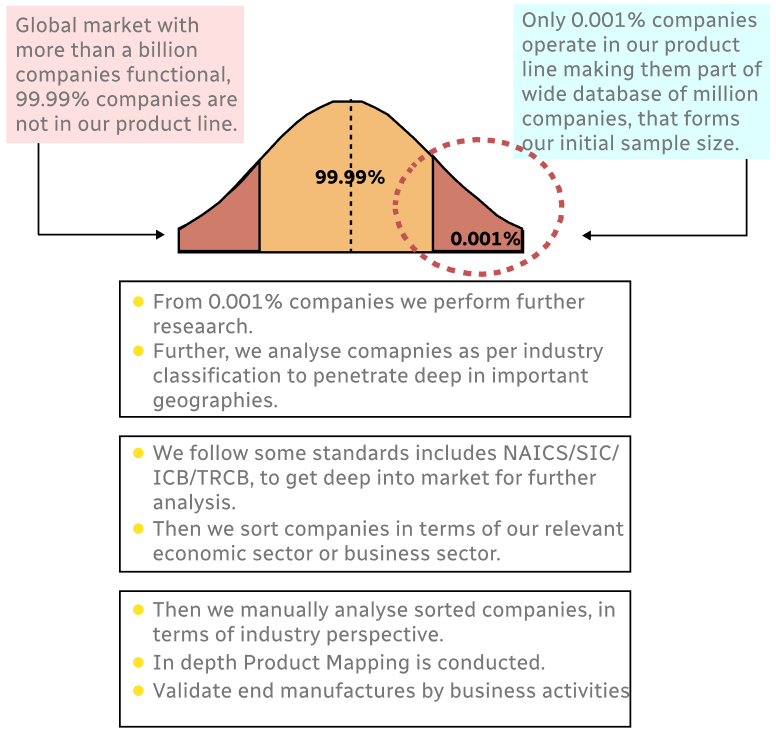
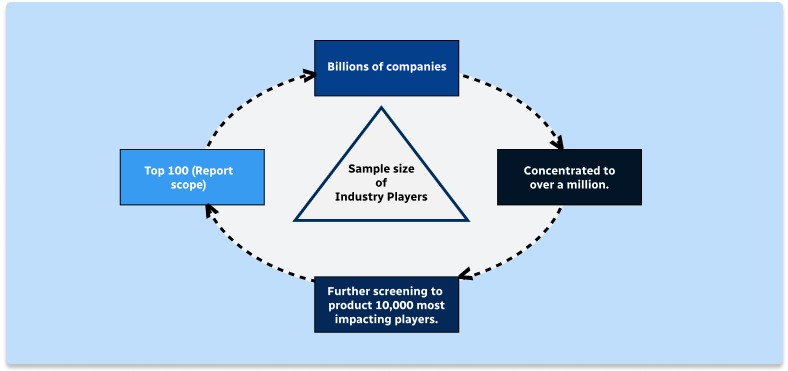
Step 1 - Identification of Relevant Samples Size from Population Database
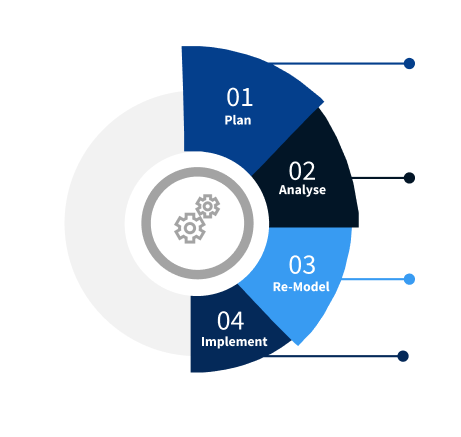
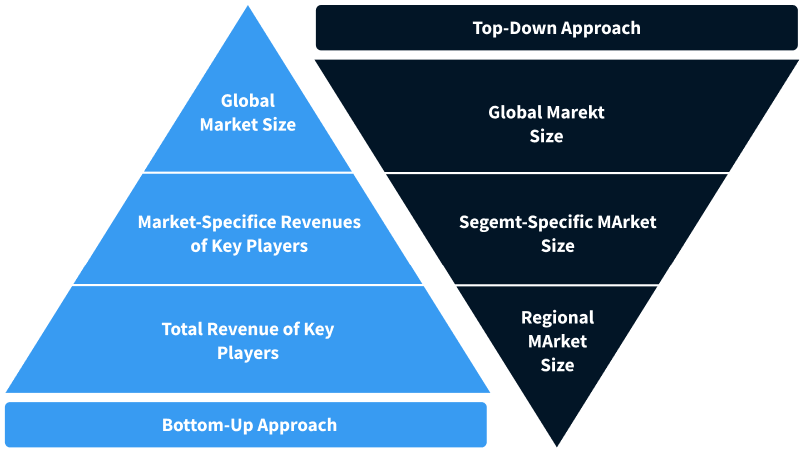
Step 2 - Approaches for Defining Global Market Size (Value, Volume* & Price*)
Note*: In applicable scenarios
Step 3 - Data Sources
Primary Research
- Web Analytics
- Survey Reports
- Research Institute
- Latest Research Reports
- Opinion Leaders
Secondary Research
- Annual Reports
- White Paper
- Latest Press Release
- Industry Association
- Paid Database
- Investor Presentations

Step 4 - Data Triangulation
Involves using different sources of information in order to increase the validity of a study
These sources are likely to be stakeholders in a program - participants, other researchers, program staff, other community members, and so on.
Then we put all data in single framework & apply various statistical tools to find out the dynamic on the market.
During the analysis stage, feedback from the stakeholder groups would be compared to determine areas of agreement as well as areas of divergence