

Key Insights
The Australian endoscopy devices market is poised for robust growth, projected to reach USD 702.78 million by 2025, with a Compound Annual Growth Rate (CAGR) of 5.53% expected to sustain this expansion through 2033. This dynamic market is primarily driven by a confluence of factors, including the increasing prevalence of gastrointestinal disorders, respiratory illnesses, and the growing demand for minimally invasive surgical procedures across various specialities. The aging Australian population, coupled with a rising awareness of early disease detection and diagnosis, further fuels the adoption of advanced endoscopic technologies. Furthermore, significant investments in healthcare infrastructure and the development of innovative endoscopic solutions by leading global players are contributing to market buoyancy. Key segments like endoscopes and endoscopic operative devices are anticipated to witness substantial uptake, supported by technological advancements leading to enhanced imaging capabilities, improved patient comfort, and greater procedural precision. The gastroenterology segment, in particular, is expected to remain a dominant force, driven by the high incidence of conditions like IBD and colorectal cancer.
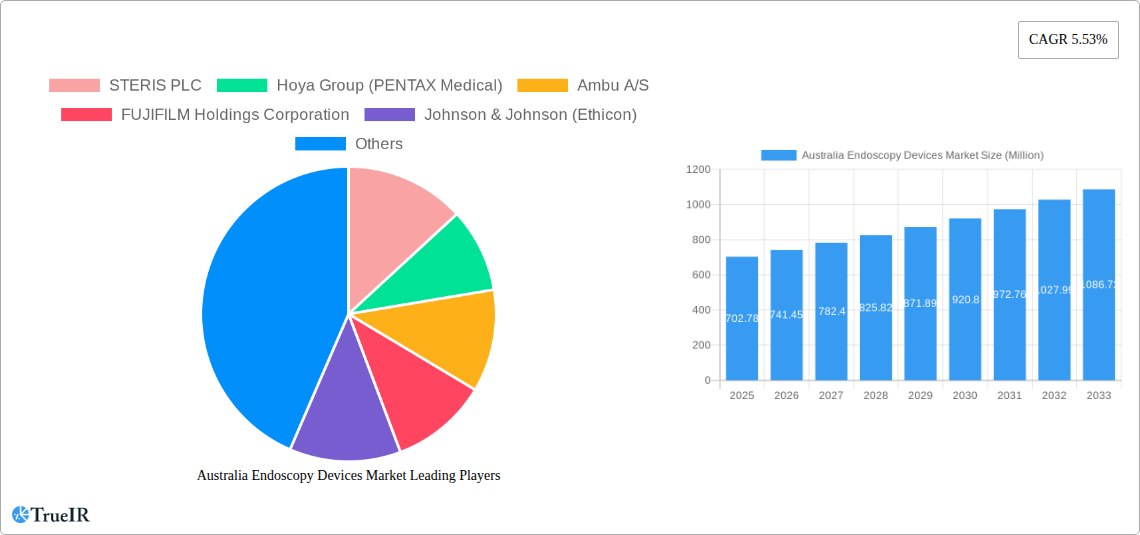
Australia Endoscopy Devices Market Market Size (In Million)

Emerging trends such as the integration of artificial intelligence (AI) and robotic technologies in endoscopy are set to revolutionize diagnostic and therapeutic interventions. The development of single-use endoscopes is also gaining traction, addressing concerns around infection control and reprocessing costs. While the market presents significant opportunities, certain restraints, including the high cost of advanced endoscopic equipment and the need for specialized training for healthcare professionals, could pose challenges. However, the increasing focus on preventative healthcare and the growing reimbursement landscape for endoscopic procedures are expected to mitigate these challenges. The Australian market is characterized by the presence of major global players, each contributing to market innovation and expansion through strategic partnerships and product launches. The continuous drive for minimally invasive techniques across specialties like cardiology, ENT, and orthopedics underscores the expanding applications and the sustained growth trajectory of the Australian endoscopy devices market.
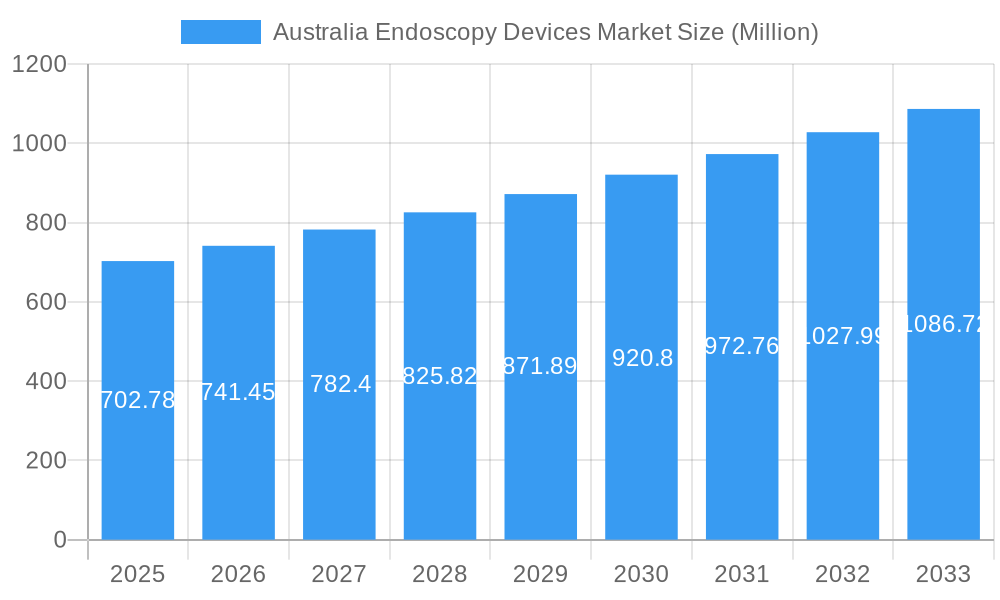
Australia Endoscopy Devices Market Company Market Share
Gain unparalleled insights into the dynamic Australian Endoscopy Devices Market with this in-depth report. Covering the historical period from 2019 to 2024, a base year of 2025, and an extensive forecast period up to 2033, this analysis provides a strategic roadmap for stakeholders. We delve into market structure, competitive landscape, critical trends, dominant segments, product innovations, key drivers, insurmountable barriers, and future outlook. Leveraging high-volume keywords such as "endoscopy devices Australia," "gastroenterology endoscopy," "pulmonology endoscopy," "surgical endoscopes," "minimally invasive surgery Australia," and "medical devices Australia," this report is meticulously crafted for SEO optimization and maximum industry engagement.
This comprehensive market research report offers a detailed examination of the Australia Endoscopy Devices Market, projecting its growth trajectory and key influencing factors. The report encompasses the study period from 2019 to 2033, with the base year and estimated year being 2025, and the forecast period spanning from 2025 to 2033. Historical data from 2019 to 2024 is thoroughly analyzed to establish a robust foundation.
Australia Endoscopy Devices Market Market Structure & Competitive Landscape
The Australia Endoscopy Devices Market exhibits a moderately concentrated structure, with a few key global players dominating market share. Innovation is a significant driver, fueled by continuous investment in research and development aimed at enhancing imaging capabilities, miniaturization, and robotic integration. Regulatory impacts from the Therapeutic Goods Administration (TGA) play a crucial role, ensuring product safety and efficacy, which can influence market entry and product approval timelines. Product substitutes, while limited in the context of direct endoscopic procedures, exist in the form of alternative diagnostic imaging techniques and less invasive surgical approaches for certain conditions. End-user segmentation is predominantly driven by healthcare institutions, including hospitals, specialized clinics, and diagnostic centers. Mergers and acquisitions (M&A) trends, while not exceptionally high in volume, have seen strategic consolidations aimed at expanding product portfolios and market reach. For instance, the acquisition of smaller domestic players by multinational corporations has been observed to strengthen competitive positions. The market concentration ratio is estimated to be around 60-70%, indicating a significant presence of the top five to seven players. M&A activities have averaged approximately 2-3 significant deals per year within the broader Asia-Pacific region, with Australia being a key market for such strategic moves.
- Market Concentration: Moderately concentrated, with top players holding a substantial market share.
- Innovation Drivers: R&D investment in advanced imaging, AI integration, and single-use technologies.
- Regulatory Landscape: TGA approval processes and evolving standards significantly influence market dynamics.
- Product Substitutes: Limited direct substitutes for core endoscopic procedures, but alternative diagnostic and surgical methods exist.
- End-User Focus: Hospitals, specialized surgical centers, and diagnostic laboratories are primary consumers.
- M&A Trends: Strategic acquisitions to expand portfolios and market presence.
Australia Endoscopy Devices Market Market Trends & Opportunities
The Australia Endoscopy Devices Market is poised for robust growth, driven by an aging population, increasing prevalence of chronic diseases, and a growing demand for minimally invasive procedures. The market size is projected to reach an estimated value of over $800 million by 2025 and is expected to witness a Compound Annual Growth Rate (CAGR) of approximately 7.5% during the forecast period of 2025-2033. Technological shifts are at the forefront, with the integration of artificial intelligence (AI) for enhanced image analysis, robotic-assisted endoscopy for greater precision, and the burgeoning adoption of single-use endoscopes to mitigate infection risks and reduce reprocessing costs. Consumer preferences are increasingly leaning towards procedures that offer faster recovery times, reduced patient discomfort, and improved diagnostic accuracy, all of which are hallmarks of advanced endoscopic interventions. Competitive dynamics are intensifying, with both established global manufacturers and emerging local players vying for market share. The increasing focus on preventative healthcare and early disease detection, particularly in fields like gastroenterology and pulmonology, presents significant opportunities for market expansion. Furthermore, the growing adoption of telehealth and remote monitoring technologies in healthcare is indirectly boosting the demand for advanced visualization and diagnostic tools, including sophisticated endoscopic equipment. The rising awareness among the Australian population regarding the benefits of endoscopic screening and diagnostic procedures for various gastrointestinal, respiratory, and other conditions is another key factor fueling market penetration rates. The investment in healthcare infrastructure and the government's commitment to improving access to advanced medical technologies further contribute to the positive market outlook. The market penetration for advanced endoscopic procedures is expected to rise from approximately 15% in 2025 to over 25% by 2033, indicating a substantial untapped potential.
The Australian endoscopy devices market is experiencing significant expansion, projected to exceed $800 million in 2025. This growth is underpinned by a CAGR of approximately 7.5% through 2033. Key trends shaping this market include:
- Technological Advancements: Integration of AI for diagnostic assistance, high-definition imaging, and miniaturization of devices for less invasive procedures.
- Rise of Single-Use Endoscopes: Driven by infection control concerns and cost-effectiveness in reprocessing.
- Robotic-Assisted Endoscopy: Enhancing precision and control during complex procedures.
- Focus on Minimally Invasive Surgery: Patient preference for reduced recovery times and improved outcomes.
- Aging Population & Chronic Disease Burden: Increased demand for diagnostic and therapeutic endoscopic procedures in gastroenterology, pulmonology, and oncology.
- Government Initiatives & Healthcare Spending: Investments in advanced medical technology and improved access to healthcare services.
- Telehealth Integration: Potential for remote diagnostics and procedural guidance.
- Early Disease Detection: Growing emphasis on screening programs for conditions like colorectal cancer and lung cancer.
Dominant Markets & Segments in Australia Endoscopy Devices Market
Within the Australia Endoscopy Devices Market, the Endoscopes segment, particularly flexible endoscopes, currently holds a dominant position due to their widespread application in gastroenterology and pulmonology. The Gastroenterology application segment is the largest contributor to market revenue, driven by the high incidence of gastrointestinal disorders such as inflammatory bowel disease, peptic ulcers, and colorectal cancer screening programs. Growth in this segment is propelled by advancements in diagnostic imaging, therapeutic capabilities like polyp removal, and the increasing adoption of colonoscopy and gastroscopy.
- Dominant Device Segment: Endoscopes (especially Flexible Endoscopes)
- Key Growth Drivers:
- High volume of diagnostic and therapeutic procedures.
- Continuous innovation in imaging and biopsy capabilities.
- Widespread use in early detection of gastrointestinal cancers.
- Key Growth Drivers:
- Dominant Application Segment: Gastroenterology
- Detailed Analysis: The prevalence of conditions like Irritable Bowel Syndrome (IBS), Inflammatory Bowel Disease (IBD), and the critical need for colorectal cancer screening are primary drivers. The development of specialized duodenoscopes and colonoscopes with enhanced features for complex interventions further solidifies its lead. The segment is expected to contribute over 35% of the total market revenue by 2025.
Following closely, Pulmonology represents another significant and rapidly growing application segment. The increasing rates of lung cancer, chronic obstructive pulmonary disease (COPD), and infectious respiratory diseases are driving the demand for bronchoscopes and related accessories. Technological advancements in narrow-band imaging (NBI) and endobronchial ultrasound (EBUS) are enhancing diagnostic accuracy and therapeutic interventions in this field.
- Significant Growing Application Segment: Pulmonology
- Key Growth Drivers:
- Rising incidence of lung cancer and respiratory infections.
- Advancements in diagnostic tools like EBUS and NBI.
- Increased focus on minimally invasive lung biopsies and tumor ablation.
- Key Growth Drivers:
- Detailed Analysis: The segment's growth is further bolstered by early diagnosis initiatives for lung diseases and the development of flexible bronchoscopes that allow for precise navigation within the lung airways. It is projected to witness a CAGR of over 8% during the forecast period.
The Endoscopic Operative Device segment, encompassing instruments like snares, forceps, and electrocautery devices, also plays a crucial role, often experiencing growth in tandem with the primary endoscopic procedures they facilitate. Visualization Equipment, including high-definition monitors and camera systems, is essential for these procedures and continues to see demand driven by the need for superior image quality.
- Key Supporting Segments: Endoscopic Operative Devices and Visualization Equipment.
- Growth Factors: These segments grow in correlation with the primary endoscopic procedures, driven by the need for precision tools and high-quality imaging.
Other application segments like Orthopedic Surgery, Cardiology, ENT Surgery, and Gynecology represent niche but growing markets, often benefiting from specialized endoscopic instruments and techniques that enable minimally invasive approaches. The expansion of these applications is fueled by ongoing innovation and the pursuit of improved patient outcomes.
Australia Endoscopy Devices Market Product Analysis
Product innovations in the Australia Endoscopy Devices Market are primarily focused on enhancing image quality through high-definition and 4K visualization, increasing maneuverability with flexible and steerable scopes, and miniaturization for less invasive access. The integration of AI-powered diagnostic assistance, real-time image analysis, and data management capabilities is a significant trend. Single-use endoscopes are gaining traction due to improved hygiene and cost-efficiency. Competitive advantages are being built on the back of superior optics, ergonomic design, robust functionality for therapeutic interventions, and comprehensive digital integration, appealing to healthcare providers seeking accuracy, efficiency, and improved patient outcomes.
Key Drivers, Barriers & Challenges in Australia Endoscopy Devices Market
Key Drivers: The Australian Endoscopy Devices Market is propelled by several critical factors. Firstly, the increasing prevalence of chronic diseases, particularly gastrointestinal disorders and respiratory illnesses, directly fuels the demand for diagnostic and therapeutic endoscopic procedures. Secondly, technological advancements, such as the development of high-definition imaging, AI-assisted diagnostics, and robotic endoscopy, are enhancing procedure accuracy and patient safety, thereby encouraging adoption. Thirdly, a growing preference for minimally invasive surgical techniques, driven by patient demand for faster recovery times and reduced scarring, significantly boosts the market. Finally, supportive government initiatives and increased healthcare expenditure aimed at improving access to advanced medical technologies contribute to market growth.
Barriers & Challenges: Despite the positive outlook, the market faces several challenges. High acquisition costs of advanced endoscopic equipment can be a significant barrier for smaller healthcare facilities. Stringent regulatory approvals from the TGA, while essential for patient safety, can lead to extended product launch timelines and increased development expenses. Furthermore, the need for specialized training for healthcare professionals to operate complex endoscopic systems can pose a hurdle. Supply chain disruptions, as witnessed globally, can impact the availability and pricing of essential components and finished devices. Finally, intense competition among established players and the emergence of innovative startups necessitates continuous product differentiation and competitive pricing strategies.
Growth Drivers in the Australia Endoscopy Devices Market Market
Key growth drivers for the Australia Endoscopy Devices Market include the escalating burden of chronic diseases, particularly in gastroenterology and pulmonology, necessitating advanced diagnostic and therapeutic interventions. Technological innovation is a significant catalyst, with the introduction of AI-driven analytics for enhanced diagnostic accuracy, robotic-assisted endoscopy for superior precision, and the widespread adoption of high-definition visualization equipment. The increasing patient preference for minimally invasive procedures, driven by a desire for reduced recovery times and improved outcomes, further fuels market expansion. Government investments in healthcare infrastructure and the ongoing efforts to promote preventative healthcare and early disease detection initiatives also play a pivotal role in stimulating market growth.
Challenges Impacting Australia Endoscopy Devices Market Growth
The Australia Endoscopy Devices Market faces several key challenges. The substantial upfront cost associated with acquiring cutting-edge endoscopic technology acts as a significant barrier, particularly for smaller healthcare providers. Navigating the rigorous and time-consuming regulatory approval processes mandated by the Therapeutic Goods Administration (TGA) can delay market entry for new products. The requirement for specialized training and skill development among healthcare professionals to effectively utilize advanced endoscopic systems presents an ongoing challenge. Additionally, global supply chain vulnerabilities can lead to unpredictable availability and fluctuations in the pricing of critical components and finished devices, impacting operational efficiency and cost management.
Key Players Shaping the Australia Endoscopy Devices Market Market
- STERIS PLC
- Hoya Group (PENTAX Medical)
- Ambu A/S
- FUJIFILM Holdings Corporation
- Johnson & Johnson (Ethicon)
- Karl Storz GmbH & Co KG
- Medtronic Plc
- B Braun Melsungen AG
- Stryker Corporation
- Olympus Corporation
Significant Australia Endoscopy Devices Market Industry Milestones
- November 2021: Ambu announced early clinical trial results for its aScope Duodeno 1.5, showcasing a remarkable 100.0% procedure success rate. The company subsequently planned a phased launch across Australia, Europe, and the United States, signaling a significant advancement in single-use duodenoscopy.
- April 2021: Endotherapeutics established a strategic partnership with Cook Medical. This collaboration designated Endotherapeutics as the authorized distributor for Cook Medical's Otolaryngology-Head and Neck Surgery (OHNS) clinical specialty portfolio within Australia, including a range of advanced endoscopes.
Future Outlook for Australia Endoscopy Devices Market Market
The future outlook for the Australia Endoscopy Devices Market is exceptionally promising, driven by a convergence of technological innovation, increasing healthcare expenditure, and evolving patient demographics. The anticipated widespread adoption of AI-powered diagnostic tools, robotic-assisted endoscopy, and the continued surge in demand for minimally invasive procedures will be significant growth catalysts. Opportunities lie in expanding the reach of endoscopic screening programs for various cancers, developing more sophisticated therapeutic endoscopic devices, and integrating digital health solutions for remote patient monitoring and consultation. The market is expected to witness substantial growth in specialized applications beyond gastroenterology, including pulmonology, cardiology, and minimally invasive orthopedic procedures, further diversifying revenue streams and enhancing healthcare outcomes across Australia. The market is projected to reach over $1.5 billion by 2033.
Australia Endoscopy Devices Market Segmentation
-
1. Type of Device
- 1.1. Endoscopes
- 1.2. Endoscopic Operative Device
- 1.3. Visualization Equipment
-
2. Application
- 2.1. Gastroenterology
- 2.2. Pulmonology
- 2.3. Orthopedic Surgery
- 2.4. Cardiology
- 2.5. ENT Surgery
- 2.6. Gynecology
- 2.7. Other Applications
Australia Endoscopy Devices Market Segmentation By Geography
- 1. Australia
Australia Endoscopy Devices Market Regional Market Share
Geographic Coverage of Australia Endoscopy Devices Market
Australia Endoscopy Devices Market REPORT HIGHLIGHTS
| Aspects | Details |
|---|---|
| Study Period | 2020-2034 |
| Base Year | 2025 |
| Estimated Year | 2026 |
| Forecast Period | 2026-2034 |
| Historical Period | 2020-2025 |
| Growth Rate | CAGR of 5.53% from 2020-2034 |
| Segmentation |
|
Table of Contents
- 1. Introduction
- 1.1. Research Scope
- 1.2. Market Segmentation
- 1.3. Research Methodology
- 1.4. Definitions and Assumptions
- 2. Executive Summary
- 2.1. Introduction
- 3. Market Dynamics
- 3.1. Introduction
- 3.2. Market Drivers
- 3.2.1. Increasing Preference for Minimally Invasive Surgeries; Rise in the Prevalence of Diseases that Require Endoscopy Procedures
- 3.3. Market Restrains
- 3.3.1. High Cost of Sophisticated Endoscopy Devices
- 3.4. Market Trends
- 3.4.1. Cardiology Segment is Expected to Witness a Significant Market Share Over the Forecast Period
- 4. Market Factor Analysis
- 4.1. Porters Five Forces
- 4.2. Supply/Value Chain
- 4.3. PESTEL analysis
- 4.4. Market Entropy
- 4.5. Patent/Trademark Analysis
- 5. Australia Endoscopy Devices Market Analysis, Insights and Forecast, 2020-2032
- 5.1. Market Analysis, Insights and Forecast - by Type of Device
- 5.1.1. Endoscopes
- 5.1.2. Endoscopic Operative Device
- 5.1.3. Visualization Equipment
- 5.2. Market Analysis, Insights and Forecast - by Application
- 5.2.1. Gastroenterology
- 5.2.2. Pulmonology
- 5.2.3. Orthopedic Surgery
- 5.2.4. Cardiology
- 5.2.5. ENT Surgery
- 5.2.6. Gynecology
- 5.2.7. Other Applications
- 5.3. Market Analysis, Insights and Forecast - by Region
- 5.3.1. Australia
- 5.1. Market Analysis, Insights and Forecast - by Type of Device
- 6. Competitive Analysis
- 6.1. Market Share Analysis 2025
- 6.2. Company Profiles
- 6.2.1 STERIS PLC
- 6.2.1.1. Overview
- 6.2.1.2. Products
- 6.2.1.3. SWOT Analysis
- 6.2.1.4. Recent Developments
- 6.2.1.5. Financials (Based on Availability)
- 6.2.2 Hoya Group (PENTAX Medical)
- 6.2.2.1. Overview
- 6.2.2.2. Products
- 6.2.2.3. SWOT Analysis
- 6.2.2.4. Recent Developments
- 6.2.2.5. Financials (Based on Availability)
- 6.2.3 Ambu A/S
- 6.2.3.1. Overview
- 6.2.3.2. Products
- 6.2.3.3. SWOT Analysis
- 6.2.3.4. Recent Developments
- 6.2.3.5. Financials (Based on Availability)
- 6.2.4 FUJIFILM Holdings Corporation
- 6.2.4.1. Overview
- 6.2.4.2. Products
- 6.2.4.3. SWOT Analysis
- 6.2.4.4. Recent Developments
- 6.2.4.5. Financials (Based on Availability)
- 6.2.5 Johnson & Johnson (Ethicon)
- 6.2.5.1. Overview
- 6.2.5.2. Products
- 6.2.5.3. SWOT Analysis
- 6.2.5.4. Recent Developments
- 6.2.5.5. Financials (Based on Availability)
- 6.2.6 Karl Storz GmbH & Co KG
- 6.2.6.1. Overview
- 6.2.6.2. Products
- 6.2.6.3. SWOT Analysis
- 6.2.6.4. Recent Developments
- 6.2.6.5. Financials (Based on Availability)
- 6.2.7 Medtronic Plc
- 6.2.7.1. Overview
- 6.2.7.2. Products
- 6.2.7.3. SWOT Analysis
- 6.2.7.4. Recent Developments
- 6.2.7.5. Financials (Based on Availability)
- 6.2.8 B Braun Melsungen AG
- 6.2.8.1. Overview
- 6.2.8.2. Products
- 6.2.8.3. SWOT Analysis
- 6.2.8.4. Recent Developments
- 6.2.8.5. Financials (Based on Availability)
- 6.2.9 Stryker Corporation
- 6.2.9.1. Overview
- 6.2.9.2. Products
- 6.2.9.3. SWOT Analysis
- 6.2.9.4. Recent Developments
- 6.2.9.5. Financials (Based on Availability)
- 6.2.10 Olympus Corporation
- 6.2.10.1. Overview
- 6.2.10.2. Products
- 6.2.10.3. SWOT Analysis
- 6.2.10.4. Recent Developments
- 6.2.10.5. Financials (Based on Availability)
- 6.2.1 STERIS PLC
List of Figures
- Figure 1: Australia Endoscopy Devices Market Revenue Breakdown (Million, %) by Product 2025 & 2033
- Figure 2: Australia Endoscopy Devices Market Share (%) by Company 2025
List of Tables
- Table 1: Australia Endoscopy Devices Market Revenue Million Forecast, by Region 2020 & 2033
- Table 2: Australia Endoscopy Devices Market Volume K Unit Forecast, by Region 2020 & 2033
- Table 3: Australia Endoscopy Devices Market Revenue Million Forecast, by Type of Device 2020 & 2033
- Table 4: Australia Endoscopy Devices Market Volume K Unit Forecast, by Type of Device 2020 & 2033
- Table 5: Australia Endoscopy Devices Market Revenue Million Forecast, by Application 2020 & 2033
- Table 6: Australia Endoscopy Devices Market Volume K Unit Forecast, by Application 2020 & 2033
- Table 7: Australia Endoscopy Devices Market Revenue Million Forecast, by Region 2020 & 2033
- Table 8: Australia Endoscopy Devices Market Volume K Unit Forecast, by Region 2020 & 2033
- Table 9: Australia Endoscopy Devices Market Revenue Million Forecast, by Country 2020 & 2033
- Table 10: Australia Endoscopy Devices Market Volume K Unit Forecast, by Country 2020 & 2033
- Table 11: Australia Endoscopy Devices Market Revenue Million Forecast, by Type of Device 2020 & 2033
- Table 12: Australia Endoscopy Devices Market Volume K Unit Forecast, by Type of Device 2020 & 2033
- Table 13: Australia Endoscopy Devices Market Revenue Million Forecast, by Application 2020 & 2033
- Table 14: Australia Endoscopy Devices Market Volume K Unit Forecast, by Application 2020 & 2033
- Table 15: Australia Endoscopy Devices Market Revenue Million Forecast, by Country 2020 & 2033
- Table 16: Australia Endoscopy Devices Market Volume K Unit Forecast, by Country 2020 & 2033
Frequently Asked Questions
1. What is the projected Compound Annual Growth Rate (CAGR) of the Australia Endoscopy Devices Market?
The projected CAGR is approximately 5.53%.
2. Which companies are prominent players in the Australia Endoscopy Devices Market?
Key companies in the market include STERIS PLC, Hoya Group (PENTAX Medical), Ambu A/S, FUJIFILM Holdings Corporation, Johnson & Johnson (Ethicon), Karl Storz GmbH & Co KG, Medtronic Plc, B Braun Melsungen AG, Stryker Corporation, Olympus Corporation.
3. What are the main segments of the Australia Endoscopy Devices Market?
The market segments include Type of Device, Application.
4. Can you provide details about the market size?
The market size is estimated to be USD 702.78 Million as of 2022.
5. What are some drivers contributing to market growth?
Increasing Preference for Minimally Invasive Surgeries; Rise in the Prevalence of Diseases that Require Endoscopy Procedures.
6. What are the notable trends driving market growth?
Cardiology Segment is Expected to Witness a Significant Market Share Over the Forecast Period.
7. Are there any restraints impacting market growth?
High Cost of Sophisticated Endoscopy Devices.
8. Can you provide examples of recent developments in the market?
In November 2021, Ambu announced early clinical trial results for aScope Duodeno 1.5 showing a 100.0% procedure success rate and was planning to launch across Australia, Europe, and the United States.
9. What pricing options are available for accessing the report?
Pricing options include single-user, multi-user, and enterprise licenses priced at USD 3800, USD 4500, and USD 5800 respectively.
10. Is the market size provided in terms of value or volume?
The market size is provided in terms of value, measured in Million and volume, measured in K Unit.
11. Are there any specific market keywords associated with the report?
Yes, the market keyword associated with the report is "Australia Endoscopy Devices Market," which aids in identifying and referencing the specific market segment covered.
12. How do I determine which pricing option suits my needs best?
The pricing options vary based on user requirements and access needs. Individual users may opt for single-user licenses, while businesses requiring broader access may choose multi-user or enterprise licenses for cost-effective access to the report.
13. Are there any additional resources or data provided in the Australia Endoscopy Devices Market report?
While the report offers comprehensive insights, it's advisable to review the specific contents or supplementary materials provided to ascertain if additional resources or data are available.
14. How can I stay updated on further developments or reports in the Australia Endoscopy Devices Market?
To stay informed about further developments, trends, and reports in the Australia Endoscopy Devices Market, consider subscribing to industry newsletters, following relevant companies and organizations, or regularly checking reputable industry news sources and publications.
Methodology
Step 1 - Identification of Relevant Samples Size from Population Database



Step 2 - Approaches for Defining Global Market Size (Value, Volume* & Price*)

Note*: In applicable scenarios
Step 3 - Data Sources
Primary Research
- Web Analytics
- Survey Reports
- Research Institute
- Latest Research Reports
- Opinion Leaders
Secondary Research
- Annual Reports
- White Paper
- Latest Press Release
- Industry Association
- Paid Database
- Investor Presentations

Step 4 - Data Triangulation
Involves using different sources of information in order to increase the validity of a study
These sources are likely to be stakeholders in a program - participants, other researchers, program staff, other community members, and so on.
Then we put all data in single framework & apply various statistical tools to find out the dynamic on the market.
During the analysis stage, feedback from the stakeholder groups would be compared to determine areas of agreement as well as areas of divergence
